Disposable vs Temporary vs Long-Term Rental Phone Numbers
When it comes to SMS verification, choosing the right type of phone number is crucial. Here's a quick breakdown of the three main options:
- Disposable Numbers: Free or very cheap, but they’re shared, unreliable, and often blocked by secure platforms. Best for one-time, low-stakes tasks.
- Temporary Numbers: Private for a short time (up to 7 days), slightly more reliable, but still face security risks and platform restrictions. Useful for short-term projects.
- Long-Term Rental Numbers: Dedicated, SIM-based numbers rented for 30+ days. Highly reliable, secure, and widely accepted by platforms like banks, WhatsApp, and Stripe. Ideal for business-critical tasks.
Quick Comparison:
| Feature | Disposable | Temporary | Long-Term Rental |
|---|---|---|---|
| Cost | Free or very cheap | $0.50–$5.00 | $50/month |
| Duration | Minutes to hours | Up to 7 days | 30+ days (renewable) |
| Privacy | Low (shared) | Moderate (exclusive) | High (exclusive) |
| Reliability | Unreliable | Moderately reliable | Near-perfect (99.9%) |
| Platform Acceptance | Often blocked | Sometimes flagged | Widely accepted |
For businesses or critical accounts, long-term rental numbers are the best choice. They ensure stable access, security, and compatibility with major platforms. Services like JoltSMS offer real-SIM numbers at $50/month, providing unmatched reliability and support for essential tasks like two-factor authentication and account management.
Disposable Phone Numbers: Fast but Unreliable
What Disposable Phone Numbers Are
Disposable phone numbers are temporary, virtual numbers designed specifically to receive SMS verification codes. These numbers are often free or available at a very low cost through various websites and apps. What sets them apart is their extremely short lifespan, sometimes lasting just a few minutes.
Unlike traditional phone numbers linked to a SIM card or even VoIP services, disposable numbers exist solely to receive a single text message. They can’t send messages and are often tied to just one service’s verification process. Once the code is received, the number becomes useless, expires, and is recycled for someone else to use.
These numbers are simple to use - no personal information, account registration, or payment details are required. You just grab a number, receive your code, and move on. Their design makes them perfect for quick, one-time tasks.
When People Use Disposable Numbers
Disposable numbers are ideal for situations where you need a quick, throwaway solution. For example, they’re commonly used to sign up for services you don’t plan to revisit, test platforms without committing, or create temporary accounts for social media or messaging apps.
Other typical uses include avoiding spam after signing up for newsletters or promotions, registering anonymously on websites requiring phone verification, or creating accounts for one-time use. They’re handy for these minor, low-stakes tasks.
Why Disposable Numbers Fail for Serious Use
The limitations of disposable numbers become painfully clear when you try to use them for anything important. First, availability is inconsistent - sometimes, you won’t even find a number when you need one. Even if you do, there’s no guarantee the SMS will arrive, and you’re often racing against the clock before the number expires.
Security is another major concern. Many disposable number services are public, meaning anyone can view the SMS messages sent to that number. If you use one of these numbers to sign up for a banking app or payment service, someone else could potentially see your verification code. Worse, a future user of the same number could try to access your account or reset your password.
These risks make disposable numbers unsuitable for critical or recurring uses. Popular platforms like WhatsApp, banks, and payment processors such as Stripe actively block disposable numbers to prevent fraud. You’ll often encounter error messages like “This number cannot be used for verification” or “Invalid phone number.” These platforms maintain databases of disposable number ranges to keep them out.
Another significant drawback is the inability to recover accounts. If you use a disposable number and later need to verify your identity, reset a password, or receive a security alert, you’re out of luck. The number you used no longer exists, leaving you permanently locked out. This makes disposable numbers a terrible choice for accounts containing sensitive data, financial information, or business tools.
For businesses managing multiple accounts on platforms like social media, cloud services, or marketing tools, disposable numbers are completely impractical. Reliable, consistent access to your accounts is essential, and disposable numbers simply can’t provide that. Their temporary nature is the exact opposite of what’s needed for serious, ongoing operations.
Temporary Phone Numbers: Short-Term Access
What Temporary Phone Numbers Are
Temporary phone numbers strike a middle ground between disposable and long-term numbers. They offer more stability than disposable numbers but without the commitment of long-term rentals. These numbers are available for short-term use, ranging from a few hours to several weeks. Unlike disposable numbers that disappear almost immediately, temporary numbers provide a longer usage window.
You can get temporary numbers through various apps and online platforms. Some services offer rentals for 24 hours, others for a week, and some even let you decide the duration. The critical difference between temporary and disposable numbers is exclusivity - during your rental period, the number is assigned solely to you.
Functionally, these numbers work just like regular ones, reliably receiving SMS codes for verification purposes. However, they operate on a rental basis, meaning you pay for access during a specific timeframe. This setup provides both benefits and challenges.
Benefits of Temporary Numbers
Temporary numbers offer a flexible and controlled solution for short-term needs. For instance, if you're running a brief marketing campaign, testing an app, or need a number for project-related verifications, these rentals can be a practical choice. Knowing exactly how long you’ll have access ensures the number won’t disappear unexpectedly during your project.
Another advantage is how easy they are to use. Most providers let you rent a number within seconds through a simple app or website, without requiring long-term contracts or subscriptions. This makes them ideal for users with limited budgets or short-term requirements.
Temporary numbers also provide a layer of privacy for non-critical tasks. Whether you're signing up for a service or verifying an account, they help protect your personal number from unnecessary exposure.
Problems with Temporary Numbers
Despite their convenience, temporary numbers come with several challenges. One significant issue is number recycling. Once your rental period ends, the number may be reassigned to someone else. This poses a potential security risk - imagine someone else receiving password reset codes or two-factor authentication messages meant for you.
Another drawback is that many platforms can detect and block non-permanent numbers. Financial services, tech companies, and other major platforms often flag temporary numbers, leading to verification errors similar to those experienced with disposable options.
Additionally, some services, including WhatsApp, Stripe, and major banks, require permanent phone numbers tied to physical SIM cards. Temporary numbers, like VoIP services such as Google Voice or Burner, are often blocked for SMS verification, making them unsuitable for these platforms.
Temporary numbers also lack long-term reliability, which is crucial for accounts you plan to maintain over time. For example, if you need to reset a password months later, a temporary number likely won’t be available. This makes them a poor choice for social media accounts, cloud storage, or business tools where consistent access is essential.
For businesses, the risks multiply. Managing multiple accounts tied to expiring numbers can become a logistical nightmare. When a number expires, you’ll need to update each account, a time-consuming and potentially disruptive process.
Lastly, there’s a risk of shared access during the rental period. Even if a provider guarantees exclusive use, you’re relying on their infrastructure and security. Any vulnerabilities on their end could compromise the privacy of your temporary number, leaving you exposed to potential risks.
Long-Term Rental Phone Numbers: Stable and Secure
What Long-Term Rental Phone Numbers Are
Long-term rental phone numbers are private numbers leased for 30 days or more, offering consistent access without the risk of sudden expiration or reassignment. These numbers operate through real-SIM technology, which means they use actual SIM cards connected to carrier networks. This is different from VoIP services like Google Voice or Burner, which rely on internet-based systems and are often blocked by verification systems.
When you rent a long-term number, it’s exclusively yours for the duration of the rental. No one else can access your messages, and the number won’t be recycled or reassigned. This exclusivity ensures reliable and secure access for SMS verification, making these numbers a dependable choice for important business operations.
Why Businesses Need Long-Term Rentals
For businesses, SMS verification is more than just a one-time task - it’s about maintaining access to critical accounts over months or even years. That’s where long-term rentals come in.
Platform acceptance is a major reason businesses choose long-term rentals. Many platforms, including banks, financial services, and enterprise tools like Stripe, AWS, and Coinbase, block VoIP and temporary numbers. These platforms require real-SIM numbers tied to carrier networks, as they provide greater security and accountability. Long-term rentals meet these requirements, ensuring you pass verification checks without issues.
Reliability is another key factor. Imagine losing access to your company’s cloud storage or missing a two-factor authentication code because your number expired or was reassigned. Long-term rentals eliminate this risk by keeping your number active as long as you maintain the rental.
Privacy is equally important. Providers like JoltSMS guarantee exclusive access to your number during the rental period, so your verification codes and sensitive messages remain secure.
For businesses managing multiple accounts across various platforms, long-term rentals simplify operations. Instead of juggling different numbers, you can use one number for WhatsApp Business, banking apps, SaaS tools, and social media accounts. This consistency not only saves time but also reduces the hassle of updating phone numbers and dealing with verification failures.
The financial sector, in particular, demands this kind of stability. Whether you’re running an e-commerce store processing payments through Stripe or managing cryptocurrency accounts on Coinbase, these platforms require permanent phone numbers for security reasons. Temporary numbers simply don’t make the cut, leaving you unable to complete verification.
How JoltSMS Delivers Better Results
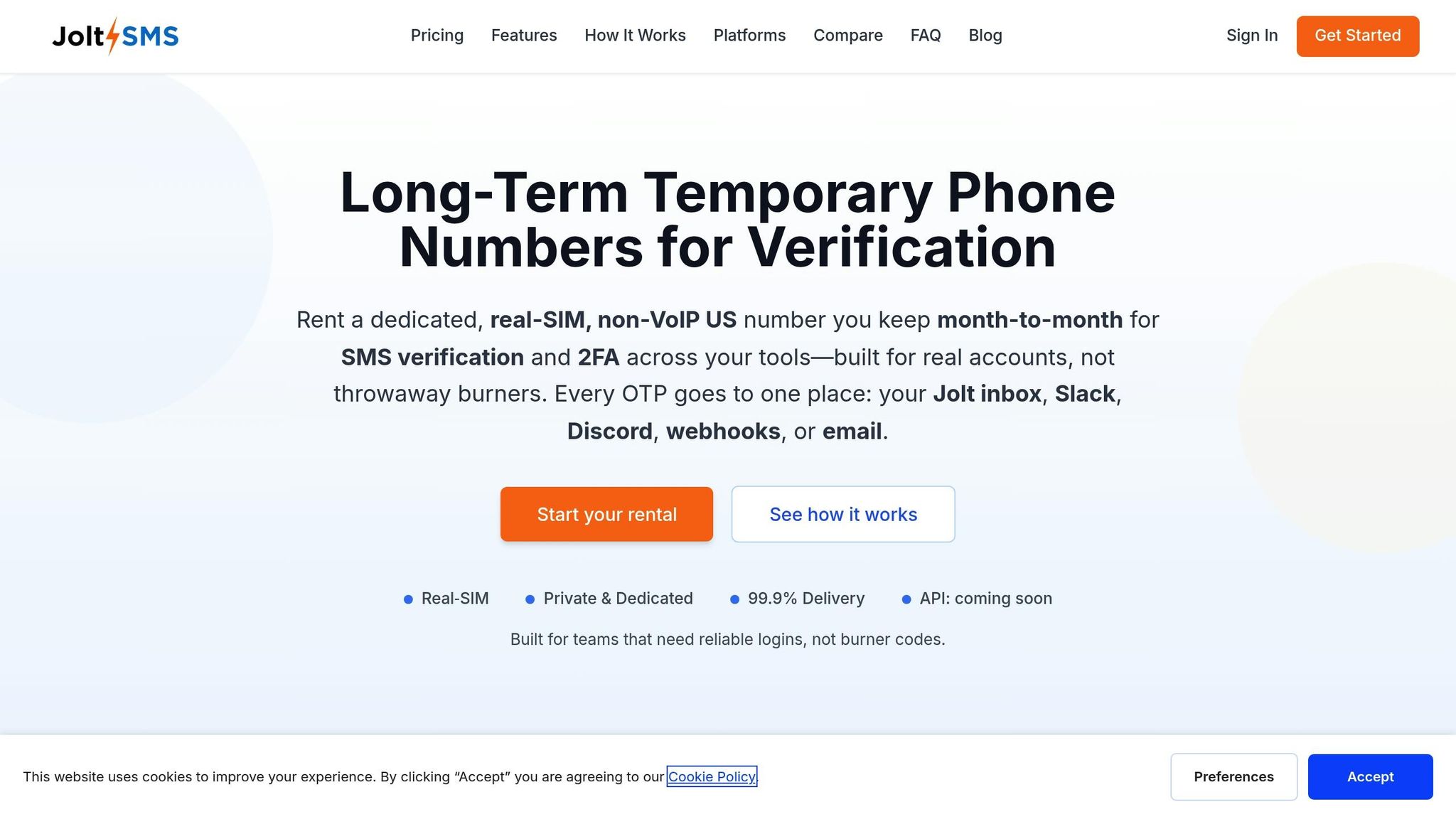
JoltSMS addresses the common issues with disposable and temporary numbers by using real-SIM, carrier-connected technology. Their numbers are accepted by over 1,000 platforms, including Google, WhatsApp, major banks, and enterprise services that typically block VoIP numbers.
The service offers a 99.9% SMS delivery rate, ensuring that verification codes arrive when you need them. This reliability comes from their carrier-grade infrastructure, which treats your rented number like any standard phone number on the network - no special flags, no suspicious routing, just dependable SMS delivery.
Team-friendly features set JoltSMS apart. For example, their instant webhook delivery to Slack and Discord allows teams to view incoming verification codes in real time without sharing login credentials or manually forwarding messages. This feature is a game-changer for companies managing multiple accounts across different platforms.
For businesses with more complex needs, JoltSMS offers a REST API that lets you automate workflows and integrate SMS reception directly into your systems. Whether you’re building internal tools or managing accounts programmatically, the API gives you full control over how you handle incoming messages.
At a flat rate of $50 per month, JoltSMS provides uninterrupted SMS delivery under a fair-use policy. Numbers are rented for a minimum of 30 days and auto-renew monthly until canceled, offering the stability businesses need without locking you into restrictive contracts.
JoltSMS also backs its service with a money-back guarantee. If SMS verification fails, you get a refund, showcasing their confidence in their real-SIM technology and carrier-grade infrastructure.
The platform includes a real-time dashboard where you can monitor incoming messages, manage your numbers, and access your SMS history. This transparency ensures you’re always informed about your verification codes. And with 24/7 human support available through a dedicated ticket system, any issues can be resolved quickly.
While VoIP services like OpenPhone and RingCentral are great for business calls, they often fall short when it comes to SMS verification. That’s where JoltSMS steps in. If you need a reliable number for receiving verification codes from platforms like WhatsApp, banks, or Stripe, JoltSMS provides a specialized solution that VoIP services simply can’t match.
During your rental period, the numbers remain private and exclusive. Once you rent a number, it’s yours alone - no one else will receive your messages, and the number won’t be recycled. This ensures the security and privacy your business accounts demand.
sbb-itb-070b8f8
Side-by-Side Comparison: Disposable vs Temporary vs Long-Term
Comparison Table: Features and Trade-offs
Picking the right type of phone number depends on your specific needs. Below is a breakdown of disposable, temporary, and long-term rental numbers, highlighting the key factors that matter for reliable SMS verification.
| Feature | Disposable Numbers | Temporary Numbers | Long-Term Rental Numbers |
|---|---|---|---|
| Typical Duration | One-time use (minutes to hours) | Short-term use (up to 90 days) | 30 days or longer (renewable monthly) |
| Cost | Low upfront cost, but frequent use can add up | Short-term fees that may accumulate over time | $50/month flat rate (predictable pricing) |
| Privacy Level | Low (shared by multiple users) | Moderate (dedicated for a limited time) | High (exclusive access) |
| Platform Acceptance | Often blocked by secure platforms | May be flagged as temporary | Highly accepted (real-SIM technology meets strict requirements) |
| SMS Delivery Rate | Unreliable due to overuse and flagging | Moderately reliable with occasional issues | Nearly perfect (99.9% delivery rate) |
| Number Type | Shared public numbers | Often VoIP or recycled numbers | Real-SIM, carrier-connected |
| Reusability | Single use only | Reusable during the rental period | Reusable with an active rental |
| Security Risk | High risk due to shared access | Moderate risk – reassignment is possible | Low risk – private and never recycled during the rental period |
| Best For | Quick signups and one-time verifications | Short-term needs like temporary accounts | Business-critical tasks like banking, 2FA, and WhatsApp Business |
| Blocked By | Often blocked by banks, Google, WhatsApp, etc. | Frequently flagged by financial services | Rarely blocked due to carrier-grade technology |
| Team Access | Not available | Typically unavailable | Yes – supports secure team collaboration via webhooks and API integration |
| Support | None | Limited or none | 24/7 human support available |
| Refund Guarantee | No | Rare | Yes – money-back if verification fails |
This table highlights the trade-offs between these options, but let’s dig deeper into what sets them apart.
Disposable numbers are cheap upfront but tend to struggle with reliability. They often get flagged or blacklisted because of heavy usage, making them less dependable for secure platforms. Temporary numbers, while a step up, still face occasional delivery issues and recycling problems. In contrast, long-term rental numbers offer a near-perfect SMS delivery rate (99.9%) thanks to carrier-grade infrastructure, making them far more reliable for critical applications.
When it comes to security, disposable numbers are the riskiest since they’re shared among users. Temporary numbers perform slightly better but may still be reassigned during their usage period. Long-term rentals, however, guarantee exclusive access, significantly reducing security risks throughout the rental term.
Another key factor is platform acceptance. Disposable and temporary numbers often rely on VoIP or recycled technology, which makes them prone to being blocked by secure platforms like Google, Stripe, or banking apps. Long-term rentals, built on real-SIM technology, are directly connected to carrier networks, ensuring they meet the strict standards required by these platforms.
For businesses, long-term rentals go a step further by supporting team collaboration. Features like webhook delivery to platforms like Slack or Discord and REST API integration make it easy for teams to securely share access without compromising account integrity. Neither disposable nor temporary numbers offer these capabilities, often requiring less secure workarounds like shared credentials.
Ultimately, understanding these differences makes it clear why long-term rentals are the go-to choice for business-critical tasks on platforms like AWS, Coinbase, or financial services. They provide the reliability, security, and compatibility needed for high-stakes applications.
Conclusion: Which Phone Number Type to Choose
The type of phone number you choose should align with your specific needs. If you're testing throwaway apps, disposable numbers might suffice, but they’re often blocked by secure platforms. Temporary numbers can work for short-term projects, but their recycling risks and delivery issues make them a shaky choice for anything critical.
For business-critical applications, long-term rental numbers are the clear winner. As outlined above, these numbers provide the reliability and security needed for SMS verifications tied to essential accounts. Whether you're managing platforms like AWS, Coinbase, Stripe, or WhatsApp Business, a persistent, unblocked number is crucial. Banking apps, financial services, and e-commerce platforms demand carrier-grade technology that meets strict verification standards, and this is where real-SIM numbers excel.
JoltSMS offers dedicated U.S. phone numbers powered by real-SIM technology - not VoIP. This ensures 99.9% SMS delivery and compatibility with over 1,000 platforms. For $50/month, you get unlimited inbound SMS, webhook delivery to Slack or Discord, a real-time dashboard, REST API integration, and 24/7 human support. Plus, your number remains exclusive to you throughout the rental period, eliminating the risk of recycling or sharing.
Unlike VoIP services like Google Voice or OpenPhone, which are great for calls but unreliable for SMS verifications, JoltSMS is specifically designed for verification codes. It's directly connected to carrier networks, and if a verification fails, they back it up with a money-back guarantee. This level of reliability simply isn’t achievable with disposable or temporary solutions.
Ultimately, each number type serves a purpose, but for critical business accounts - whether it’s 2FA-protected platforms, services where downtime equals lost revenue, or accounts you can’t afford to lose - long-term rental numbers are the only sensible choice. Discover more about how it works or dive into the advantages of real-SIM technology.
FAQs
What are the risks of using disposable or temporary phone numbers for SMS verification?
Using disposable or temporary phone numbers for SMS verification might seem convenient, but it comes with some serious risks. These numbers are often shared among multiple users, which means your verification codes and private messages aren’t as private as you’d think. This shared access makes it easier for someone else to gain unauthorized control over your accounts.
On top of that, many platforms are quick to detect and block disposable or temporary numbers, especially for crucial services like two-factor authentication (2FA). If this happens, you could find yourself unable to verify your identity or access key accounts right when you need them most. For a more secure and reliable solution, long-term rental phone numbers, like those provided by JoltSMS, offer a safer alternative you can count on.
Why are long-term rental phone numbers a better choice for businesses compared to disposable or temporary numbers?
Long-term rental phone numbers offer businesses a reliable solution by providing uninterrupted access to the same number. This consistency is crucial for tasks like secure logins, continuous communication, and two-factor authentication (2FA), which are often essential for daily operations.
While disposable or temporary numbers might seem appealing due to their lower cost, they fall short when ongoing use is required. Many platforms block these numbers or demand the same number for future access, making them impractical for professional needs.
By opting for a long-term rental number, your business can sidestep disruptions, uphold its credibility, and comply with verification requirements across more than 1,000 platforms. It's a dependable choice for businesses that prioritize stability and professionalism.
Why do services like banks and WhatsApp block disposable or temporary phone numbers, and how do long-term rental numbers solve this problem?
Banks, WhatsApp, and similar platforms block disposable or temporary phone numbers because they’re frequently linked to fraud or misuse. These short-term numbers lack reliability and are often flagged as risky by verification systems.
Long-term rental numbers offer a practical solution by providing stability and trust. Since they’re linked to actual SIM cards, they’re far more dependable and widely accepted for essential tasks like two-factor authentication (2FA) or account verification. Platforms recognize these numbers as legitimate, ensuring hassle-free and secure verifications every time.