How Long Should You Keep a 2FA Phone Number?
You should keep your 2FA phone number as long as it’s tied to important accounts. Changing numbers too often can lead to account lockouts and security issues, especially for banking, crypto, or government services. Use a reliable, long-term number for high-risk accounts and avoid temporary or VoIP numbers, which are often rejected. Here’s a quick guide:
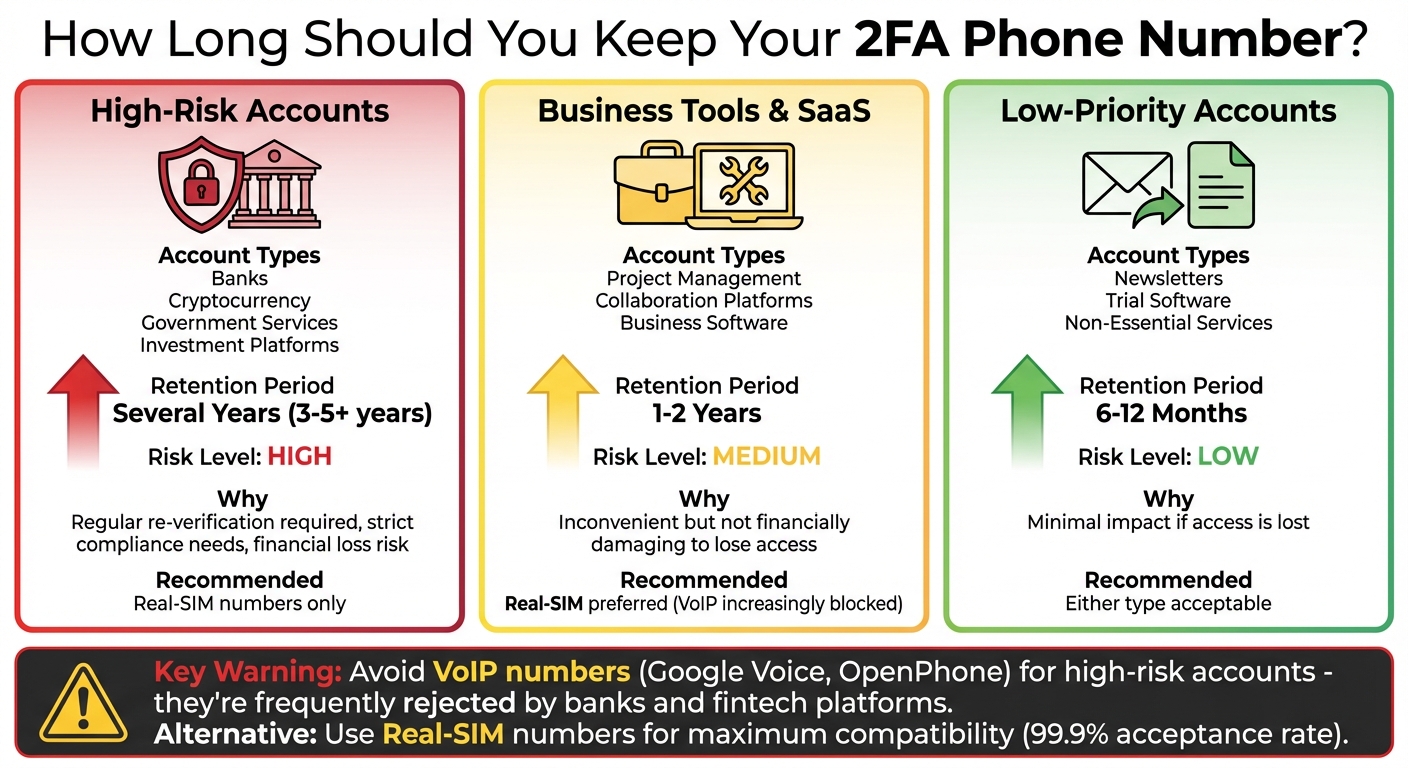
- High-risk accounts (e.g., banks, crypto): Keep the number for several years.
- Business tools/SaaS platforms: 1–2 years is typically sufficient.
- Low-priority accounts (e.g., newsletters): 6–12 months may work.
For long-term stability, consider using a real-SIM number to avoid verification errors and number recycling risks. Always update accounts systematically when changing your number to ensure continuous access.
2FA Phone Number Retention Guide by Account Type
What Determines How Long to Keep a 2FA Number
The duration for keeping a 2FA number depends on factors like account security needs, regulatory obligations, and the reliability of your phone carrier. These elements play a key role in deciding how long your 2FA number should stay active.
Account Risk Levels and Security Threats
For high-risk accounts - think banks, cryptocurrency wallets, or investment platforms - keeping a stable 2FA number is critical. These services often perform re-verification checks, and if your registered number is inactive, you could lose access. On the other hand, low-risk accounts, like newsletter sign-ups or trial software, offer more leeway, making it less essential to maintain the same number.
Compliance and Regulatory Requirements
Financial institutions and fintech platforms must adhere to strict rules, which often include maintaining consistent contact information for audit purposes and security protocols. Using a Real-SIM number, designed for long-term use, ensures smooth verification processes and minimizes the risk of account lockouts. Familiarizing yourself with these regulations can help you determine the appropriate lifespan for your 2FA number.
Carrier Reliability and Technical Issues
The type of phone service you use can directly impact the reliability of 2FA. Temporary numbers frequently lead to verification errors. Real-SIM numbers, like those offered by providers such as JoltSMS, provide dedicated, long-term numbers that work even when VoIP numbers are rejected. Carrier outages, network updates, and number recycling policies can also create problems. For instance, if a number is abandoned, it might be reassigned, leaving your codes vulnerable to interception. To avoid disruptions and maintain account security, it’s essential to use a stable, long-term 2FA number.
How Long to Keep Your 2FA Number: Rules of Thumb
When deciding how long to keep your 2FA number, think about the security level and importance of the accounts it protects. Financial accounts require long-term stability, while temporary or low-priority accounts can work with shorter retention periods. Here's a breakdown to help you decide:
Banks, Crypto, and High-Risk Accounts: Keep for Years
For accounts tied to banks, cryptocurrency platforms, or government services, it's crucial to retain your 2FA number for several years. These platforms often require regular re-verification and consistent contact details for security and compliance purposes. Changing your number should only happen if it's compromised or absolutely unavoidable.
To ensure long-term stability, consider using a dedicated real-SIM number, like those offered by JoltSMS for $50/month. These numbers are reliable and meet the strict requirements of financial institutions. On the other hand, VoIP numbers from services like Google Voice or OpenPhone are frequently rejected by banks and fintech platforms, making them unsuitable for securing high-risk accounts.
Business Tools and SaaS Platforms: 1–2 Years
For tools like project management software, collaboration platforms, or other business-related services, a retention period of 1–2 years is generally sufficient. While losing access to these accounts can be inconvenient, it’s rarely financially damaging. Keeping the same number reduces login hassles and simplifies account management, especially when adding team members. Real-SIM numbers tend to work better here as well, as many SaaS platforms are starting to block VoIP numbers for verification purposes.
Low-Risk and Temporary Accounts: 6–12 Months
For accounts like newsletter subscriptions, trial software, or other non-essential services, a 6–12 month retention period is usually enough. If you're testing a service or creating an account you might not use again, keeping the number for a shorter time can make sense. However, if there’s a chance you’ll need access later, consider holding onto the number a bit longer to avoid re-verification headaches. Balancing convenience with the likely lifespan of the account is key.
Why Number Stickiness Matters
Sticking with one long-term 2FA number isn’t just about convenience - it’s a smart security move. Platforms rely on a stable verification history, and frequent changes can disrupt this, potentially leading to security alerts or even account lockouts. Let’s dive into why frequently changing your number can be risky.
What Happens When You Change Numbers Too Often
Switching your 2FA number too often can cause major headaches. You might face account lockouts during re-verification or struggle with password resets. One of the biggest risks? Number recycling. When you abandon a number, carriers may reassign it to someone else. If that happens, the new owner could end up receiving your verification codes - a serious security concern.
Real-SIM vs. VoIP Numbers for 2FA
Not all phone numbers are equal when it comes to 2FA. Real-SIM numbers, tied to physical SIM cards and carrier networks, are widely accepted on platforms like banking, fintech, and government services. On the other hand, VoIP numbers (like those from Google Voice or OpenPhone) are great for business calls but often fall short for 2FA. If you’ve ever seen a “phone number no longer valid” error while using a VoIP number, this limitation is likely the culprit.
JoltSMS: Long-Term Real-SIM Numbers for Business
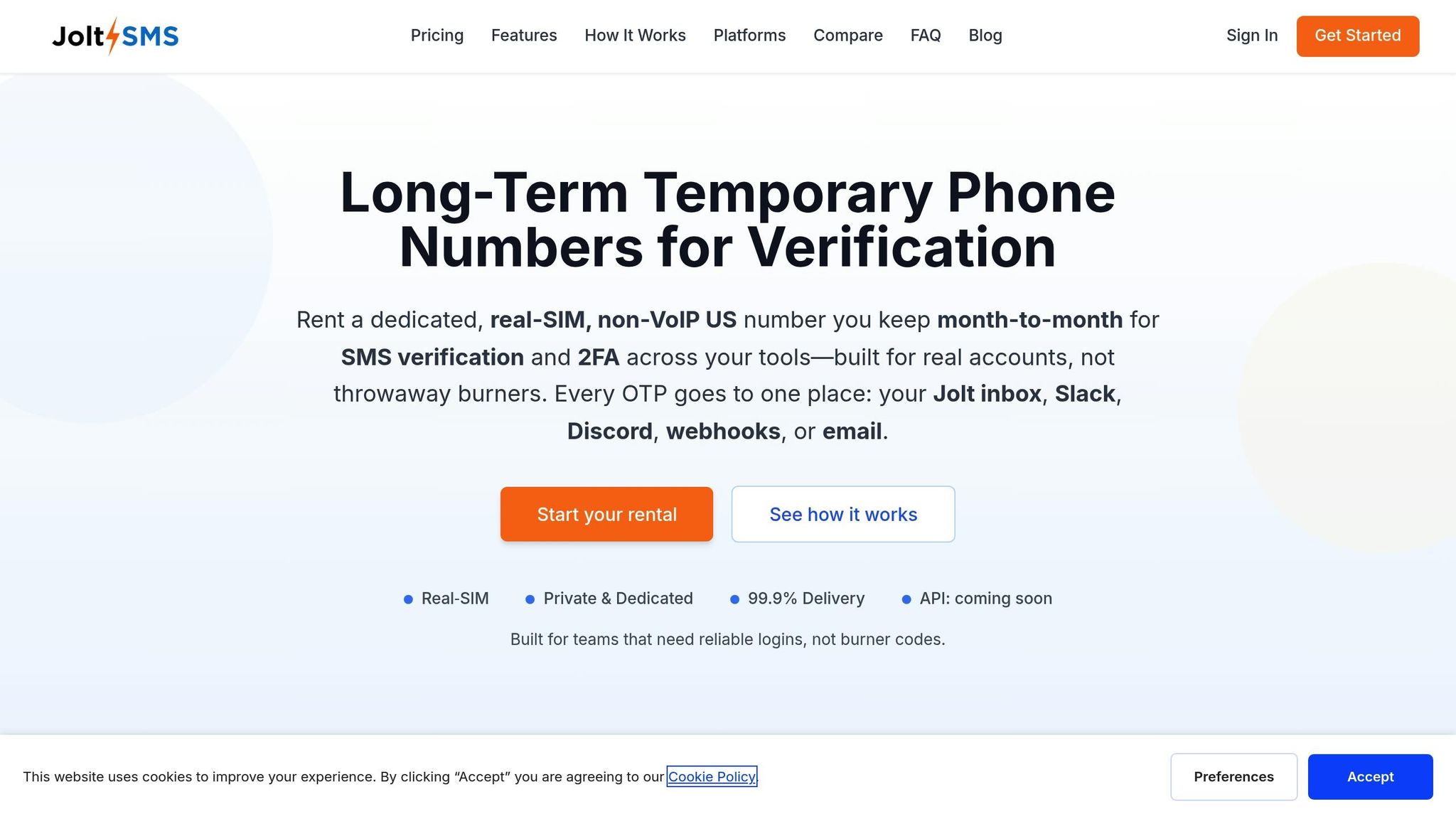
JoltSMS offers dedicated real-SIM US numbers designed for long-term 2FA use. For $50/month, you get a private number that’s accepted by over 1,000 platforms, unlimited inbound verification texts, team access for up to 10 members, and automatic billing renewals - ensuring your account stays secure and uninterrupted.
sbb-itb-070b8f8
How to Change Your 2FA Number Safely
Changing your 2FA (two-factor authentication) number requires careful steps to avoid being locked out of your accounts or creating security vulnerabilities. It's essential to update each account systematically while ensuring you still have backup access along the way.
When to Update Your 2FA Number
If your current number is a VoIP number and it’s being rejected during verification, it’s time to switch to a dedicated real-SIM number. This ensures smoother authentication and reduces the risk of issues with account access.
How to Update Your 2FA Number
Start with your most important accounts first. Here’s what you need to do:
- Log into each account individually.
- Go to the security or account settings section.
- Update your 2FA phone number with the new one.
- Before removing your old number, test the new one by requesting a verification code.
Once the new number is verified and working, you can safely remove the old one. This step-by-step approach helps maintain uninterrupted access to your accounts.
Keeping Your 2FA Updated
Don’t set it and forget it. Regularly review your 2FA settings to make sure your phone number is still valid and functional. For business accounts, consider using centralized management tools. These systems often allow multi-channel routing and role-specific access, reducing the chances of verification errors and improving overall security[1].
Conclusion
For high-risk accounts like those in banking, cryptocurrency, or financial services, long-term phone numbers are a must. Business tools and SaaS platforms tend to work well with numbers active for 1–2 years, while low-risk accounts can often get by with numbers lasting 6–12 months.
Unlike VoIP services such as Google Voice or OpenPhone, real-SIM numbers are consistently accepted for SMS verification on platforms like banks, fintech services, and government websites.
JoltSMS provides real-SIM, non-VoIP U.S. numbers for $50 per month, designed for reliability and stability. These numbers are dedicated solely to you during your rental period, never recycled, and compatible with over 1,000 platforms, boasting a 99.9% delivery success rate [1].
When updating your two-factor authentication (2FA) number, it’s essential to follow a methodical process. Start by updating your most critical accounts first, thoroughly test the new number before deactivating the old one, and regularly review your security settings. Stability is key because many platforms periodically re-verify your phone number. Using a legitimate, stable number minimizes the risk of account lockouts.
FAQs
Why shouldn’t you use a VoIP number for two-factor authentication (2FA)?
Using a VoIP number for two-factor authentication (2FA) can create a host of problems. Many platforms don't accept VoIP numbers for verification because they are easier to fake and generally less secure than traditional SIM-based numbers. This can lead to failed verification attempts and make your accounts more susceptible to unauthorized access.
Another concern is that VoIP numbers are frequently shared or recycled, which raises the chances of someone else gaining access to your private accounts. For a more secure and reliable 2FA experience, it's better to stick with a real SIM-based number that is widely accepted and offers stronger protection.
What’s the best way to update your 2FA phone number safely?
To update your 2FA phone number securely, start by verifying the new number across all platforms where it’s linked. For high-risk accounts, such as those with banks, be prepared for re-verification requirements every 30–90 days. To avoid compatibility issues, always use a real-SIM number (like JoltSMS) instead of a VoIP number.
Keep your old number active until the new one is fully verified. This step helps maintain uninterrupted access to your accounts during the transition and minimizes the risk of losing essential 2FA codes.
Why should you use a real-SIM number for sensitive accounts?
When it comes to securing sensitive accounts - like those tied to banks, fintech services, or government platforms - using a real-SIM number is a smart move. Many of these platforms won’t accept VoIP or virtual numbers during verification, making a real-SIM the more dependable option. It ensures your account remains accessible without the hassle of repeated verification.
Another key advantage of real-SIM numbers is their stability. They significantly lower the risk of account lockouts, providing a reliable solution for high-risk accounts that demand long-term security and uninterrupted access.